A Texas survey permit gives conflicting periods for the same turtle-take figures: the narrative says annual; the table says ten years. That matters because reaching a listed level can suspend the entire covered gill-net programme.
The September 2, 2026 issuance notice supports the ten-year reading for loggerhead, hawksbill and Kemp's ridley turtles, agreeing with the table. It does not remove the annual wording inside Permit 29887. A programme manager cannot fix that discrepancy by counting more carefully. The period itself needs clarification with NMFS.
This permit governs Texas Parks and Wildlife Department's fisheries-independent gill-net surveys in Texas bays and estuaries. It describes 780 net sets a year across two ten-week seasons, under an authorization running from September 1, 2026 through August 31, 2036. These are conditions for a particular scientific programme, not rules for commercial fishing or evidence that a shutdown has occurred.
The counting conflict affects the programme-level stop, while other permit triggers govern the crew, sampling grid and agency review. Some observations change the next net set immediately. Others change where crews can work for years. Reaching the programme limit brings a separate suspension and agency-controlled restart.
A sighting changes the set without waiting for a total
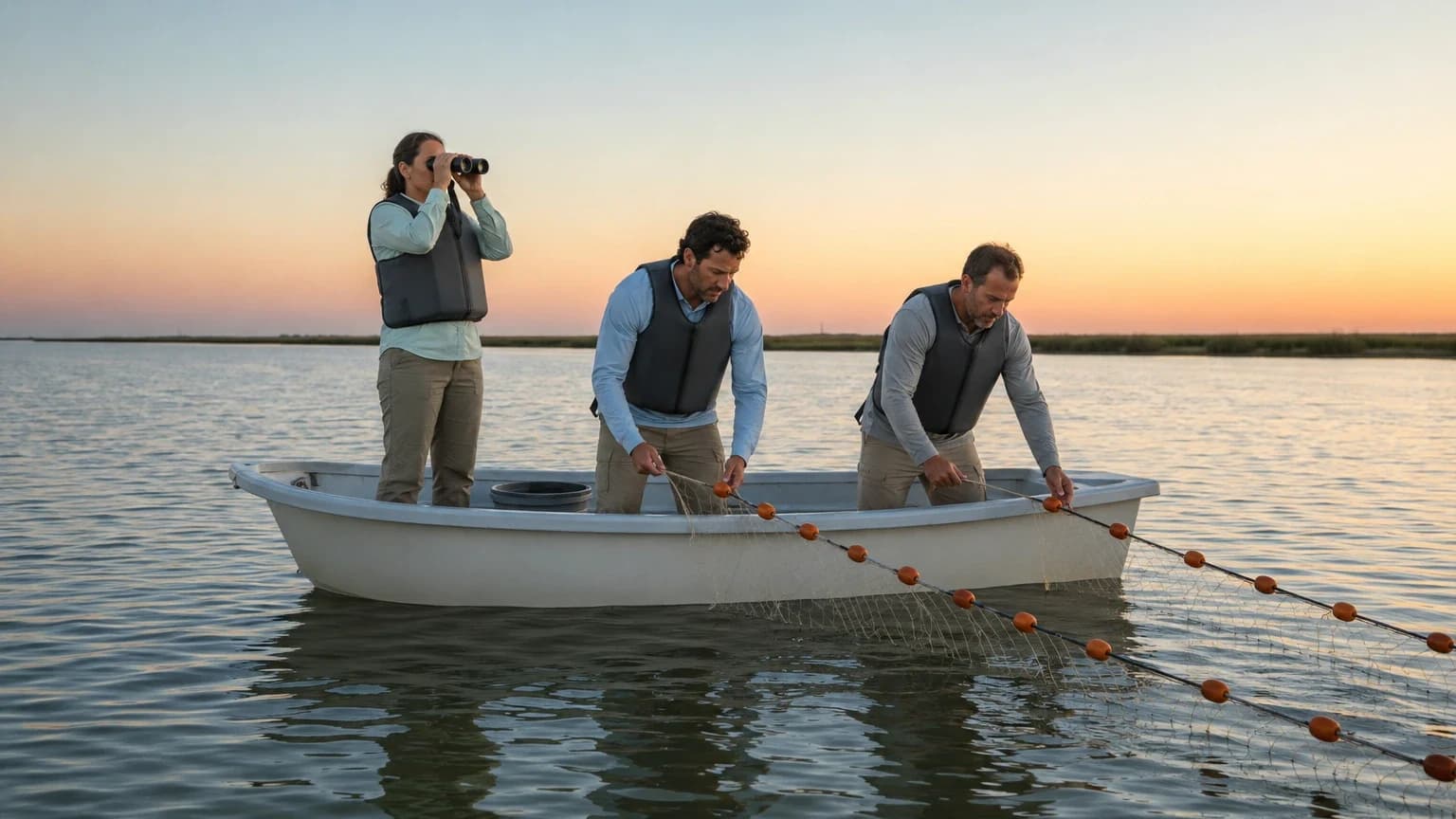
The permit requires a dedicated observer with no other duties during a 30-minute observation period. The first 15 minutes come before deployment; observation continues while nets are set. A protected species seen within the sampling area prevents deployment. A turtle seen during deployment requires net removal and relocation.
That control does not wait for an annual or ten-year tally. The observation is enough to change the immediate job. A manager resolving the table's wording still needs crews able to apply this separate instruction.
A report completed after the crew leaves cannot substitute for that decision. The observer must be available while a sighting can still prevent or interrupt the set.
The location has its own event history
A sampling grid can also become unavailable before the programme reaches a take limit. One endangered-turtle entanglement removes the grid from the sampling framework for five years. Two threatened-turtle entanglements within 365 days trigger the same removal.
Here the permit supplies a specific look-back period and distinguishes the species groups. A generic turtle-interaction count would lose both the location and classification needed to decide whether that grid remains eligible.
Identified hot-spot grids carry another instruction: set the net last and retrieve it first, with no more than one net per night in a hot-spot grid for each bay system. So an available grid can still change the order of the night's work.
The next crew needs that history before receiving its assignment. A boat can be ready, the survey season open, and a particular location unavailable under these conditions.
The programme stop requires a different handoff
When a listed take level is reached, TPWD retains permit coverage but must temporarily suspend all covered gill-net surveys. A written incidental-take report is due within 24 hours. TPWD must work with NMFS on measures to reduce the risk of exceeding the authorized take, and NMFS's Office of Protected Resources may authorize resumption after review.
Possible measures include changes to locations or timing, gear configuration or deployment, enhanced monitoring and a necropsy. Exceeding a level separately requires suspension while the agencies confer on continuation, with possible additional measures or permit modification.
The reporting clock does not promise a restart time. Completing a report within 24 hours cannot itself release the boats.
Every incidental take, not only a reached limit, is reportable within 24 hours. The required details include location, time, species, condition, gear, environmental conditions, handling and photographs or video. Those particulars connect the interaction to the grid history and give the agency something more useful than a total when considering continued work.
Keep the uncertain trigger separate from the clear controls
The annual-versus-ten-year wording belongs at the start of the field-plan discussion because it affects recognition of a programme-level stop. Choosing a convenient period locally would bury the uncertainty in an apparently precise number.
But that uncertainty does not make the observer, grid or reporting instructions disappear. They have distinct triggers. The management task is to resolve the disputed period with NMFS while preserving those separate decisions in the programme.
The authorization supplies no measured reduction in turtle take or completed restart to evaluate. Its operating sequence is specific: a sighting reaches the crew, an interaction updates the location history, and a reached limit triggers agency review. A field briefing should follow that sequence and identify where clarification is still required before any counter is trusted to say that work can continue.