Every fleet. Every working day. A clearer view.
Know what is running, what needs attention and what is due for service. Marine Fleet IQ is in pilot; Auto Fleet is in development for road vehicles and the shops that maintain them.
Marine pilots underway · Auto Fleet in development
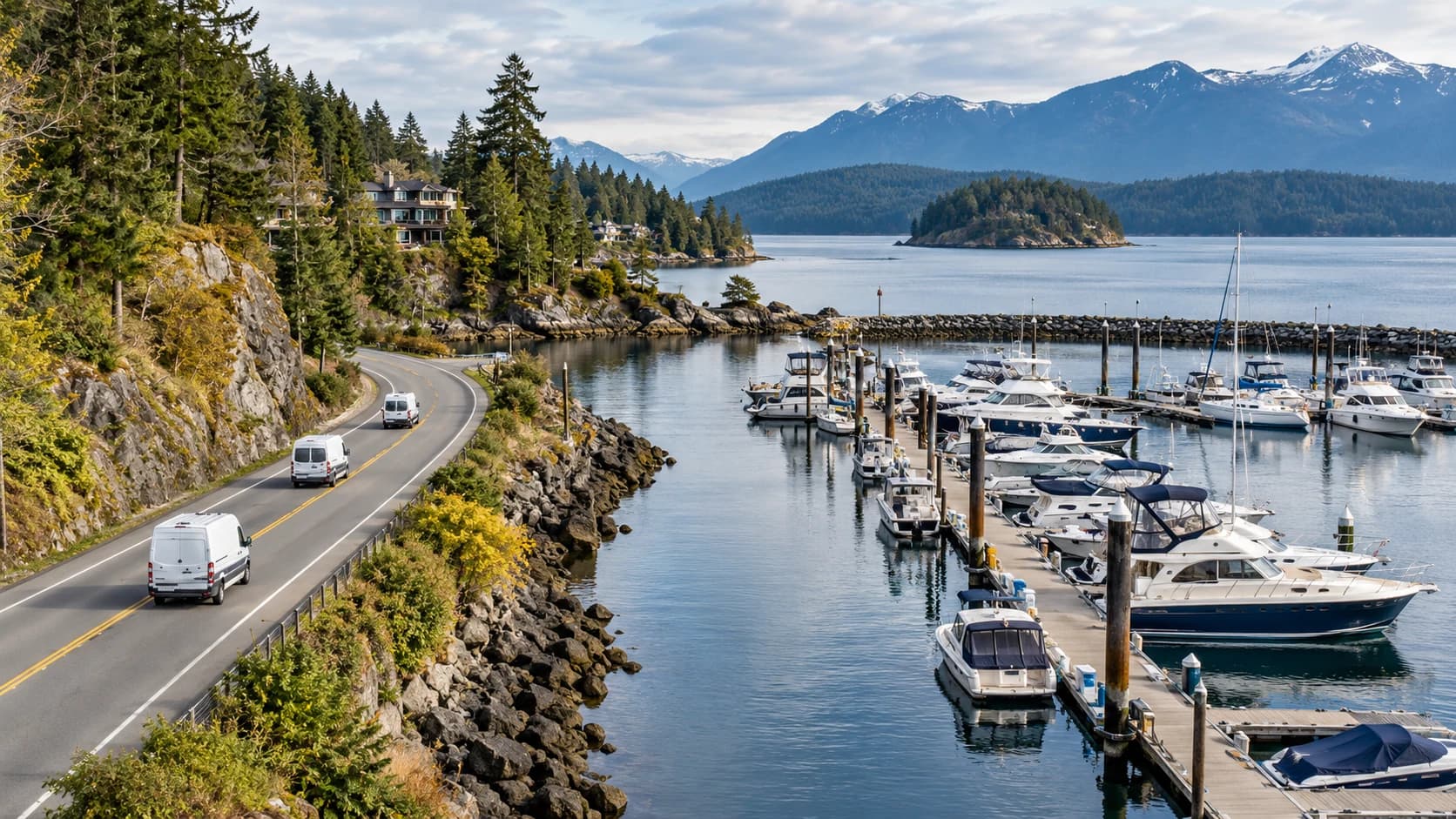
From the road to the service bay.
Vehicle visibility and service context for fleet operators and the shops that keep them moving.
- 01Understand vehicle useVehicle location, recorded trips, odometer readings and engine hours in context.
- 02Keep service in viewAlerts and maintenance tasks alongside the vehicles that need attention.
- 03Connect fleet and shopA shared view of open repair orders for client fleets that grant access. Service booking remains a team decision.

The cost of a missed signal.
Marine fleets face costly incidents and maintenance interruptions. Suntiq helps teams review the signals available from their connected equipment and decide what needs attention.
Prevent. Protect. Perform.
See the signals. Understand the context.
Bring connected engine readings, fuel information, recorded trips and maintenance tasks into one operating picture. Available signals depend on equipment and connectivity.
- 01Know before it’s a problemReview the engine, fuel, battery and position signals supported by each connected vessel.
- 02Visibility between outingsReview reported battery and vessel conditions between trips, with visibility from shore.
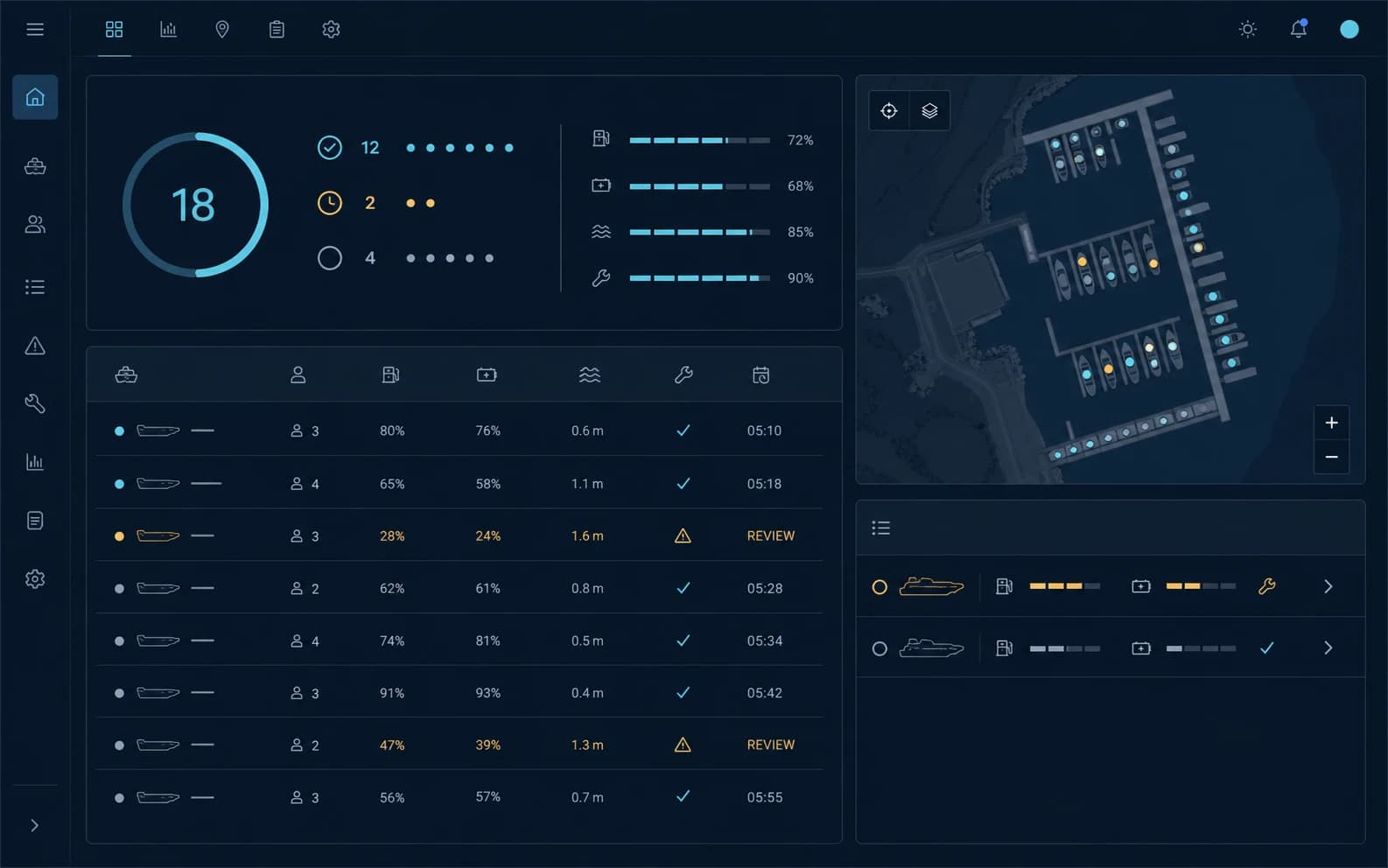
- 03One view of the operationHealth, readiness, and utilization for every vessel in one place · fleet-wide visibility, vessel-level clarity.
- 04You stay in commandSuntiq advises; your team decides. Alerts reach the helm, the phone, and the ops desk the moment they fire.
Morning readiness, before the first member walks the dock.
Every vessel’s health, fuel, power, and open exceptions in one sweep · with plain-language explanations your whole team can act on.
Every hat on the dock.
Fleet IQ was designed role by role · each person gets exactly what their day needs, and nothing they don’t.
Best-fit pilots are centralized and close to the dock.
The strongest early fit: repeated trips, a known vessel set, and a manager who already owns readiness, service coordination, and customer experience.
The operating rhythm, covered.
- 0106:40 · Readiness sweepReview available vessel readings, open maintenance tasks and the operating schedule before departures.
- 0209:15 · Underway exceptionsReview incoming vessel and engine alerts while boats are underway.
- 0314:30 · Turnover checksBetween trips: what came back different, what needs a look, what’s clear to go out again.
- 0418:00 · End of dayReview the day’s recorded trips, fuel use and maintenance needs before planning tomorrow.
A pilot built around your operation.
- 01Scope the pilotAgree on the vessels, location, installation plan, and success measures.
- 02Operate and observeUse Suntiq during normal operating days while the team records exceptions and service outcomes.
- 03Review the evidenceCompare readiness and service workflow results, then decide whether to expand.
Apply for pilot consideration.
A limited number of qualified operators, selected for early conversations and controlled pilot planning.