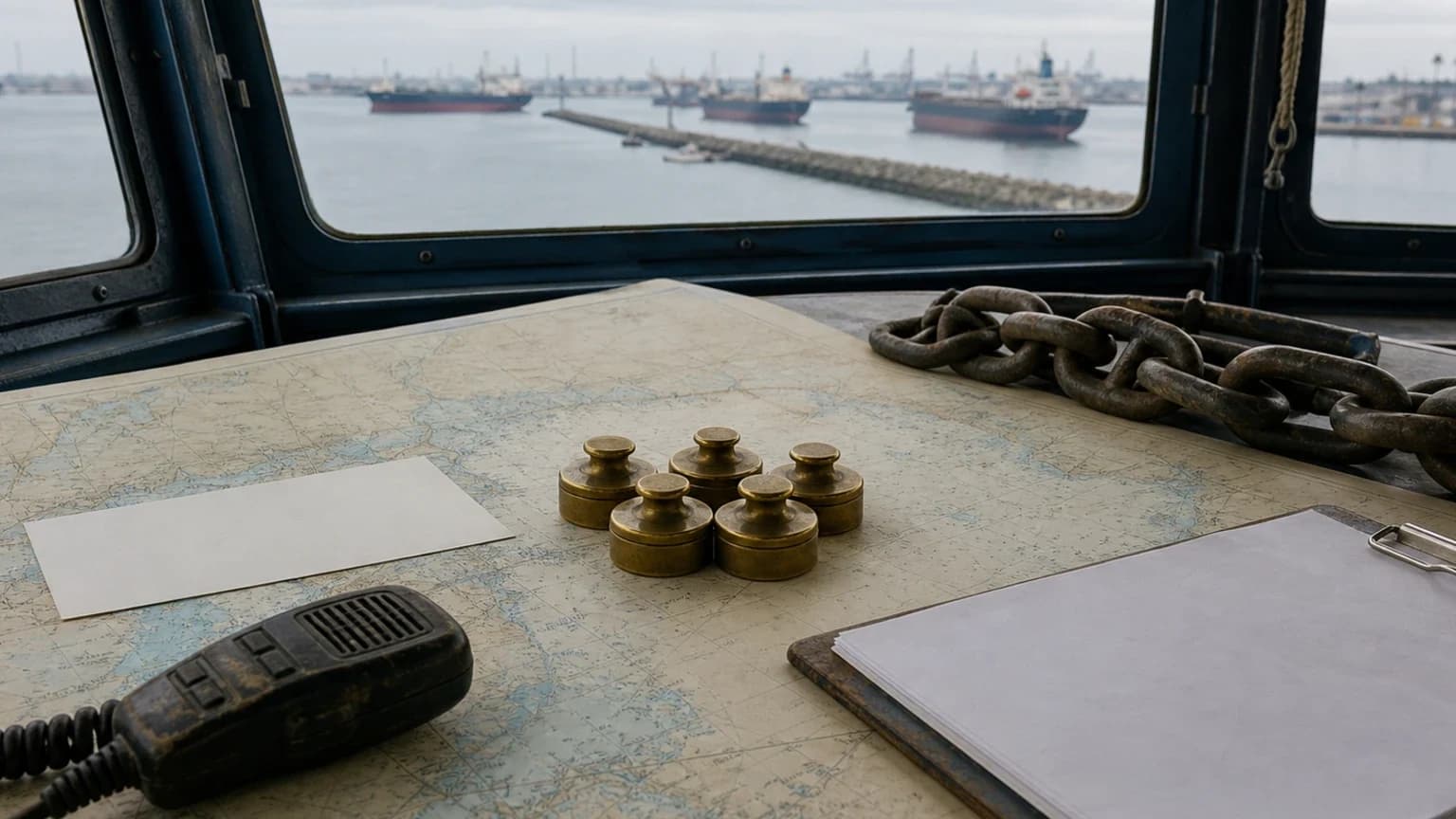
A forecast of 35-knot gusts can matter before a ship measures those winds at anchor. That is the operational change inside a 2025 Los Angeles–Long Beach anchorage amendment.
The rule published September 9, 2025, effective October 9, changed a propulsion-standby trigger from sustained winds above 40 knots to forecast or observed winds of at least 35 knots, including gusts. Its preamble describes anchored commercial vessels over 1,600 gross tons, but the amended trigger paragraph says “vessels” without repeating the old qualifier. This comparison does not settle that scope discrepancy.
The earlier dated rendering and the amendment make the difference checkable. A procedure watching only measured sustained wind would miss two accepted inputs in the amended language: a forecast and a gust. Updating “40” to “35” would leave the procedure incomplete.
The second-anchor instruction also became equipment-specific: ready to let go if installed. The amendment allowed the Captain of the Port to require additional precautions, including standby tugs. It did not turn every threshold crossing into the same tug order.
This historical case is useful to someone writing a weather-triggered readiness procedure because it shows what must travel with a number: the kind of observation, whether forecasts qualify, the comparison at the exact boundary, and the vessel's equipment and scope.
It is not a current bridge checklist. Today's requirements and local directions need a fresh check before use. The durable point is narrower: when a forecast qualifies, waiting for the instrument aboard to cross the threshold can mean the procedure reacts later than its governing rule intends.