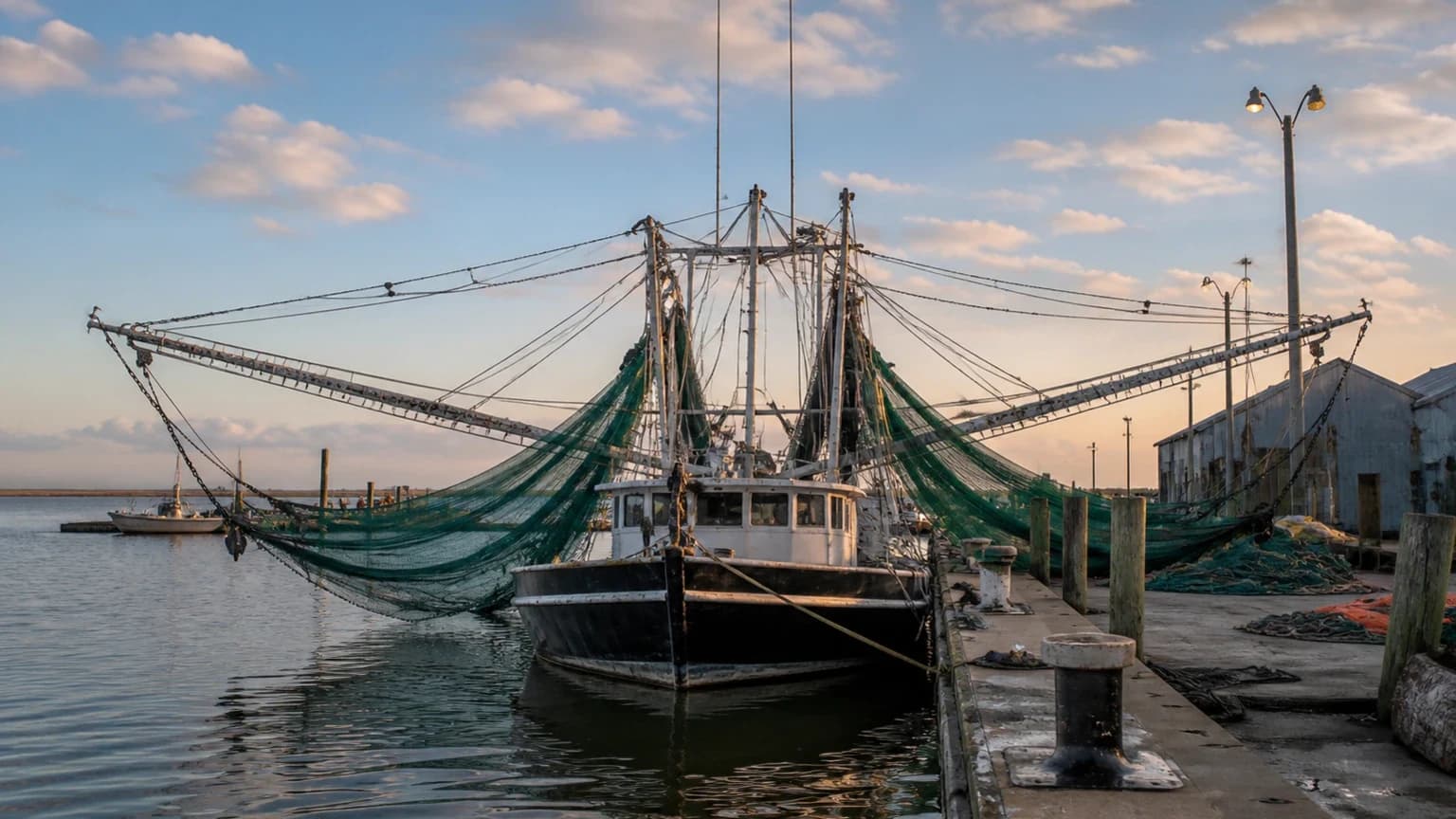
The Federal Gulf shrimp permit has a resale market. The average boat, in the agency's cited 2023 operating figures, lost money. Both facts appear in the same proposal to keep new permits out of the fishery.
A boat-and-permit buyer should pause here. Scarcity can support the value of permission to fish while the fishing itself remains a poor business. The seller may offer one package price; the evidence needs to support two different parts of the purchase.
The August 25, 2026 proposal would extend the moratorium on new Federal Gulf shrimp permits through October 26, 2036. Comments close September 24. Those are proposed terms, not a completed extension or a promise about what a permit will be worth.
Permission has a market of its own
A valid permit is required for commercial Gulf shrimp harvest in Federal waters, and permits can be transferred. The agency reports a median transfer price of $5,250 for 2022–2024. That figure describes historical transactions; it cannot appraise a particular permit offered today.
There is a mechanism behind the scarcity. A permit remains renewable for one year after expiration. If it goes unrenewed beyond that period, it is permanently removed from the pool. NMFS reports that 1,933 permits were renewed in 2008 and 1,287 were valid or renewable in 2024, a decline of 646. The proposal sets out the renewal terms, counts and transfer-price history.
The asset therefore depends on both a continuing limited-entry policy and the condition of the individual permit. An old permit number is not enough evidence that a buyer will receive usable access. Its status and the terms of the transfer belong in the purchase decision before any value is attached to it.
The agency expects extending the moratorium to preserve permit value relative to allowing open access. That is an expectation about the policy comparison. It says nothing about whether the asking price for a particular boat is sensible.
Holding a permit and working a boat are different counts
From 2019 through 2023, the average annual count of vessels with valid permits was 1,376. The average number with recorded landings was 932. Subtracting leaves 444; dividing 932 by 1,376 gives about 67.7 percent. These are comparisons of period averages, not a list of the same 444 vessels sitting idle every year.
The figures do not say that a third of the boats were broken. They do not separate mechanical condition from an owner's decision not to fish, or tell a buyer why a particular vessel had no landings. A permit count measures access; landings establish recorded activity. Neither measures available vessel-days.
That distinction helps with a specific purchasing question. A permit demonstrates something the boat is allowed to do. A landing history demonstrates something it did. To judge future operation, a buyer still needs the vessel's own records. The average gap cannot stand in for them.
The year changes the economic picture
The proposal's longer-period figures are more favorable than its final year. For 2019–2023, average annual net cash flow per active vessel was $21,249 and net operating revenue was $4,810. Both measures were positive and increasing through 2021, then turned negative in 2022 and remained negative in 2023.
For 2023 alone, NMFS reports average net cash flow of negative $4,885 and average net operating revenue of negative $14,635. The regulatory flexibility analysis states its monetary estimates in 2023 dollars. These are agency fleet averages, and the two measures should not be substituted for each other.
The comparison matters because a five-year average and a single weak year can each support a selective sales story. Neither is a forecast. A useful review asks how the boat under consideration performed during that deterioration and whether its own costs and receipts support the price. The permit's historical transfer value cannot answer that question.
Better than open access can still mean losing money
NMFS expects the extension to improve profitability relative to allowing the moratorium to expire. It also says the relevant effects cannot be quantified with existing data. There is no contradiction between expecting a policy to prevent worse economics and reporting negative operating results under the existing policy.
The policy comparison is narrower than a profitability forecast. Avoiding additional competition does not establish positive earnings. Preserving a resale market does not establish the boat's condition. A proposed ten-year extension also requires a final-action check before a buyer relies on that horizon.
Put the permit's status and historical market evidence on one side of the evaluation, the boat's operating evidence on the other. If the vessel case only works because its permit is scarce, the missing evidence is still the boat's.